
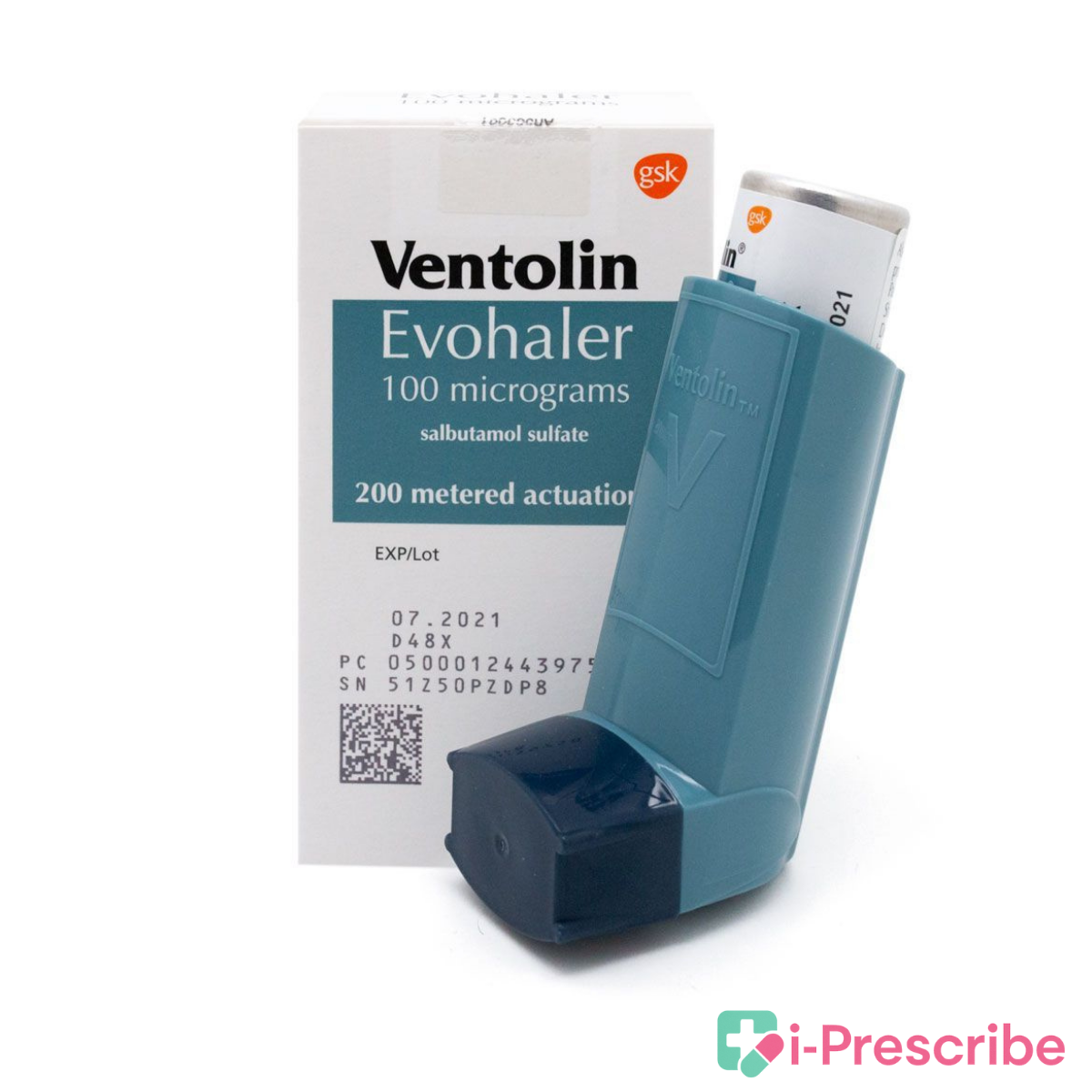
What is Ventolin?
Ventolin is a medication used to relieve breathing problems caused by asthma and other lung conditions such as Chronic Obstructive Pulmonary Disease (COPD).
The active ingredient in Ventolin is salbutamol, which belongs to a group of medicines called short-acting beta-2 agonists (SABAs).
Ventolin is commonly referred to as a “reliever inhaler” because it works quickly to open the airways and ease symptoms such as:
-
Wheezing
-
Shortness of breath
-
Chest tightness
-
Coughing associated with asthma
Ventolin usually starts working within a few minutes, and the effects typically last 4–6 hours.
How Ventolin Works
Ventolin contains salbutamol, which works by relaxing the muscles in the airways of the lungs.
In conditions such as Asthma, the muscles surrounding the airways tighten and the lining of the airways can become inflamed, making breathing difficult.
Salbutamol works by:
-
Stimulating beta-2 receptors in the airway muscles
-
Relaxing these muscles
-
Widening the airways (bronchodilation)
-
Allowing air to move more freely in and out of the lungs
This helps to quickly relieve symptoms of breathing difficulty.
Directions for Use
Ventolin is usually supplied as a metered dose inhaler (MDI).
Typical dosing instructions are:
For relief of symptoms
-
Adults and children: 1–2 puffs when needed
For prevention of exercise-induced symptoms
-
2 puffs 10–15 minutes before exercise
Maximum use
-
Usually up to 4 times daily, unless otherwise directed by a healthcare professional.
Always follow the instructions provided by your prescriber or pharmacist.
How to use the inhaler
-
Remove the mouthpiece cover and shake the inhaler well.
-
Breathe out gently.
-
Place the mouthpiece between your lips and seal tightly.
-
Start to breathe in slowly and press the inhaler once.
-
Continue breathing in deeply.
-
Hold your breath for about 10 seconds, then breathe out slowly.
-
If a second puff is needed, wait 30–60 seconds before repeating.
Using a spacer device may improve delivery of the medication, especially in children.
Important Advice
Seek medical advice if:
-
You need to use your inhaler more frequently than usual
-
Your symptoms are not improving
-
The inhaler does not relieve symptoms
Overuse of reliever inhalers may indicate poorly controlled asthma and your treatment plan may need review.
Reviews
There are no reviews yet.